Tableau Interview Questions and Answers

- What is Tableau?
Tableau is considered as a powerful data visualization tool used in Business Intelligence (BI) Industry, which simplifies the raw data into an easily understandable format.
- What are the features of Tableau?
The main features of Tableau are:
- Data Blending
- No need of technical knowledge
- Real-time analysis
- Drag and drop feature
- Shared Dashboards
Click Here More Details Tableau Online Training
- Explain the different Tableau products.
Here is a list of Tableau products:
- Tableau Desktop: It is a self-service business analytics tool that translates pictures of data into optimized queries.
- Tableau Server: It is enterprise-level software where you can publish a dashboard using Tableau Desktop and share it within the organization using Tableau Server.
- Tableau Online: It is a hosted version of Tableau Server.
- Tableau Reader: It is a free desktop application where you can open and view the visualizations.
- Tableau Public: It is free Tableau software where you can make visualizations but need to save in a workbook or worksheet in Tableau Server.
- Name the different data types in Tableau.
- Boolean
- Date
- Date & Time
- Text/String
- Number
- Geographical values
- Define Measures and Dimensions.
Measures are the numeric values or measurable quantity of data. Measures are stored in a table that supports data storage at atomic levels. For example, a Sales Table may consist of Product Key, Promo Offer, Items Sold, etc.
Dimensions are the descriptive value of an attribute. For example, product name, size, color, description, etc.Know More Tableau Online Course
- What is the difference between a .twb and .twbx extension?
A .twb is the extension of an XML document that contains all the selections and layout made in the Tableau workbook, whereas a .twbx is the extension of a zipped archive.
- Name the types of join in Tableau.
- How many tables can you join in Tableau?
You can join 32 tables maximum in Tableau.
- What are the different ways of connections you can make with the dataset?
There are two ways to make a connection with your dataset:
- Live: You can connect live to the dataset.
- Extract: This method will make a static snapshot of the data to be used.
- Explain Shelves.
Shelves are available on the top and left of the view. Views can be build by placing field onto the shelves.Read More Tableau Training
- Define Sets.
Sets are the fields that contain a subset of data based on some condition.
- Define groups.
Groups are a combination of Dimension members to make high-level categories.
- What is the Hierarchical field?
The hierarchical field is used for drilling down data, which means viewing the data in a more granular form.
- What is the Tableau Data Server?
Tableau server acts as a medium between Tableau users and the data. It allows you to upload and share extracts of data, maintain database connections, etc. You can make changes to the data set, calculate fields, save and share with others.
- What is the Tableau Data Engine?
Tableau Data Engine is an analytical database that is designed to achieve instant query response, predict performance. While working on the large amount of data, it may take some time to import the data, but after that, everything speeds up.Read More Tableau Online Course
- Explain the types of filters in Tableau?
Filters are used to make restrictions on the data from the database. There are different filters in Tableau:
- Normal filter: It restricts the data based on the dimensions and measures.
- Quick filter: It is used to filter each worksheet on a dashboard while changing the values at run time dynamically.
- Context filter: Context filter is used to filter the data that is being transferred to the individual worksheet.
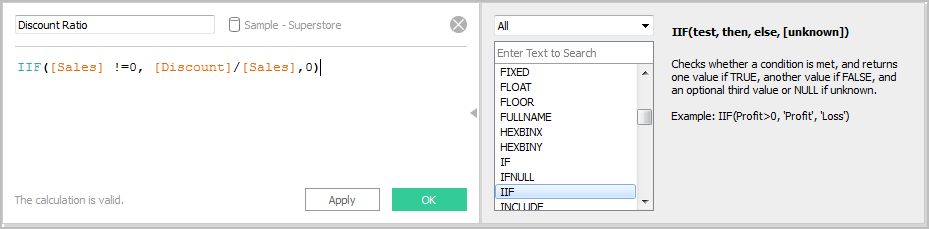
- How to create a calculated field in the Tableau?
Click the drop-down option to the right side of Dimensions on Data Panel and then select Create > Calculated field to open the calculator.Know More Tableau Online Training
Name the field and write the formula.
- What is a dual-axis?
The dual-axis helps the users to view the scales of two measures in the same graph.
- What is the main difference between a tree map and a heat map?
A heat map is used to compare categories with color and size.
A tree map does the same, but the difference is it is most powerful and used for illustrating hierarchical data and part to whole relationships.
- What is aggregation and disaggregation of data?
Aggregation is the process of viewing numerical values or measures at a higher and more summarized level.
Disaggregation means the data allows viewing every row of your data, which is useful for analyzing measures.Read More Tableau Training


Comments
Post a Comment