DevOps Tutorial for Beginners

Overview of DevOps
A study by Grand View Research says that the DevOps market size across the globe is estimated to reach US$12.85 billion by 2025. According to a report from SD Times, ‘Indeed’s job postings show that the role of a DevOps Engineer has seen a 225 percent jump.’ DevOps Engineer is at the second position on Glassdoor’s rankings for the 50 best jobs in America. Glassdoor says that the average annual salary of a DevOps Engineer ranges from US$135,000 to US$180,000.
What exactly is DevOps?
Don’t get scared with this term ‘DevOps.’ It is nothing but the practice or methodology of making ‘Developers’ and the ‘Operations’ team work together.
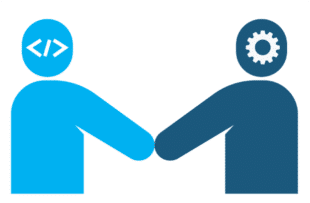
Now, how exactly is this achieved? We will discuss this as we move further.
Why DevOps?
Before understanding the concepts and methodology of DevOps, we need to understand why do we even need DevOps?
Why DevOps? Why not other methods?
Before DevOps came into the picture, the Waterfall model was the earliest SDLC approach that was used for software development. This method, which was used for illustrating SDLC in a sequential flow, was considered to be reliable at first.Read More Devops Online Training
Prepare yourself for the industry by going through these
The Workflow of the Waterfall Method
Let’s consider, we’re developing a software using the Waterfall method. Below are the steps that will be included in the SDLC if we’re using this method: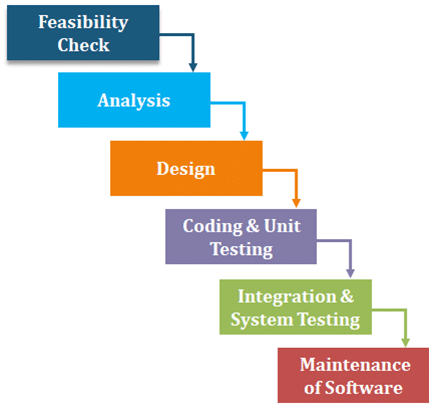
- Feasibility check: The feasibility phase is used for determining whether a particular approach/technique will be feasible enough for developing the software.
- Analysis of the requirements: In this phase, we need to analyze all system and software requirements from customers’ point of view and gather information about these requirements. The requirements will then be captured in the software requirement specification (SRS) document to avoid the incompleteness of the product.
- Design: The goal of this phase is to transform the requirements listed in the SRS document into an ordered structure that is appropriate for their implementation in programming.
- Coding and unit testing: The design that is created in the previous stage is supposed to get converted into the source code in this stage, and then every design module is coded and checked individually.
- Integration and system testing: After the design of each module has been coded, the integration of these modules is carried out appropriately. Then, these integrated modules are tested individually. After this, the acceptance testing is carried out in which the product is delivered to and tested by the customer for checking whether to accept it or reject it.
- Maintenance of the software: Maintenance is that phase of the software development life cycle where 60 percent of the entire effort is spent. Several maintenance operations are performed in this phase such as corrective maintenance, perfective maintenance, and adaptive maintenance, where error corrections and functionality enhancement, along with trying the software on new environments and operating systems, are done.
Now, let’s discuss the advantages and disadvantages of this model.
Advantages
- This method is easy and simple to use
- Easy to manage due to its rigidity
- Each phase has a review process making it less vulnerable to errors
- The one-at-a-time process phases do not overlap each other
- Reliable for small projects
Disadvantages
- While the application is in the testing stage, it is really difficult to go back and make changes relating to any issue that happened in the previous steps due to miscommunication or lack of knowledge
- It is a risky process as it is difficult to diagnose and to provide feedback
- Its main focus is to help internal teams work efficiently. It excludes end-users/clients, due to which the majority of people do not trust this methodology
- There will be delays in the testing process because this method insists teams to wait until the process reaches its 4th or 6th stage
Because of all these disadvantages, organizations wanted a much efficient model to carry out SDLC. Hence came the Agile method that changed the scenario.
Enroll today in the to get a clear understanding of DevOps Online Course
Agile Software Development
Agile involves an incremental approach like the Waterfall model but with an iterative perspective, along with focusing on customer feedback, incorporating small rapid changes, and speeding up releases. It basically breaks the product into smaller divisions and finally integrates them for the testing process.
Now, let’s take a look at its advantages and disadvantages.
Advantages
- The Agile methodology considers customer feedback throughout the project, which gives enough time to the team for making decisions
- It welcomes making changes but at great expense
- It has the ability to scale
- There is continuous attention to technical excellence and good designs
- This method prioritizes and schedules the most valuable features for implementation, decreasing the risk of having unusable resources
- Small and dedicated teams are involved with a high degree of involvement and coordination
Disadvantages
- There is less predictability in Agile
- It requires more time and commitment from every stakeholder. Testers, developers, and customers must interact with each other constantly and should agree to each other’s decisions in order to get the task done, and hence Agile is time-consuming
- Limited documentation often comes as a problem. In the case of fallbacks, there are very less detailed documents so as to cross-check
- The Agile model requires minimal planning at the beginning that makes it easier to develop the project quickly, but there is never a finite end. Due to unexpected functionalities, a clear vision of the project is not available, and mostly the stakeholders are not sure of what their final product would look like
In a nutshell, when the Waterfall model failed to deliver consistency in the result, the Agile methodology came into existence. However, as discussed above, there were many disadvantages to the Agile model as well:
- In the case of the Waterfall model, there was a gap between customers’ software requirements and the developers, which was overcome by Agile

Gaps Between Customers and Developers
- While in the case of the Agile method, there was still a gap between the development and operations folks
 Gaps Between the Operations Team and Developers
How do you think it was overcome?
It was in this scenario DevOps was introduced in order to overcome the gap between developers and the operations team.

Moving to the next section in this DevOps tutorial, let’s check out the major differences between Agile and DevOps.Differences Between Agile and DevOps
Agile DevOps Agile majorly focuses on collaboration, customer feedback, and small rapid changes DevOps brings development and operations teams together It does not focus on automation It focuses majorly on automation to increase efficiency while deployment The development process is inherent for Agile, making it less focused on testing and implementation processes DevOps focuses on all development, testing, and implementation phases with equal importance It overcomes the gap between customers and developers It overcomes the gap between the development and operations folks How exactly does DevOps work?
Let’s move to the next section in this DevOps tutorial and check out the DevOps life cycle. Thy, we can understand how DevOps works.Know More Devops Training




Comments
Post a Comment